


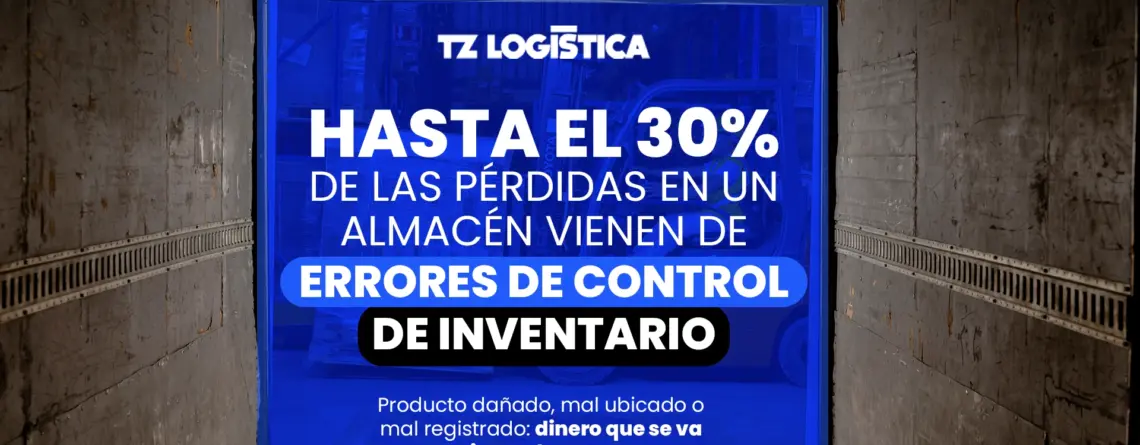
When we think about losses within a warehouse, the first things that usually come to mind are theft or merchandise damaged during transport. But the reality is different: even the 30% of the losses in a warehouse come from inventory control errors.
Misplaced, incorrectly registered, or simply "lost" in the system. Money disappearing unnoticed until it appears in the end-of-month balance.
At TZ Logística, we know these errors are not a minor problem; they are a silent leak that erodes the profitability of any operation. Let's see why they occur and how to avoid them.
Where are these losses really coming from?
1. Damaged product that is not detected in time
An item that's been damaged, improperly stacked, or exposed to unsuitable storage conditions can sit on a shelf for weeks without anyone noticing. By the time it's finally discovered, it's no longer saleable, and the loss is simply recorded as an avoidable surprise.
2. Incorrect location
A product that exists in the warehouse but isn't where the system says it is is practically the same as not having it at all. It generates duplicate purchases, order delays, and wasted time looking for something that was there all along.
3. Poor record keeping
Poorly recorded entries and exits, manual counts prone to human error, or outdated systems that don't reflect the actual state of the warehouse. Every recording error translates into purchasing, sales, and replenishment decisions based on inaccurate data.
The true cost of these mistakes
It's not just about lost merchandise. Every inventory control error has a ripple effect:
- Capital tied up in products that "do not exist" for the system.
- Customers dissatisfied with incomplete or delayed orders.
- Wrong purchasing decisions, either due to excess or lack of stock.
- Hours of work lost searching for and correcting inconsistencies.
How to reduce these losses
- Digitize inventory control. Warehouse Management Systems (WMS) drastically reduce the margin of human error in records and locations.
- Implement cyclical counting. Instead of a general inventory once a year, conduct frequent partial counts to detect errors before they accumulate.
- Standardize the receiving and storage processes. Each product must have a defined place and a clear procedure for locating, checking, and registering it.
- Train your team. Most inventory errors are unintentional; they result from unclear processes or a lack of appropriate tools.
- Audit regularly. Periodic reviews of the system versus the physical reality of the warehouse allow for the detection of error patterns before they become significant losses.
The conclusion
Inventory control isn't just an operational detail; it's one of the most important drivers of profitability for any business with a warehouse. Every misplaced or incorrectly recorded product is money lost without you noticing, until it's too late.
At TZ Logística, we help companies optimize their warehousing and inventory control processes so that the 30% of avoidable losses stays where it should be: in your pocket.
Do you want to know how much you could be losing due to inventory errors in your warehouse? Contact us and let's do a diagnosis.








Leave a Reply