


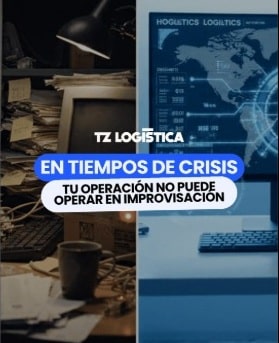
In times of crisis, your operation cannot operate on improvisation.
Global changes, inflation, international conflicts, route saturation, cost increases, and operational disruptions.
Today, any movement in the market directly impacts the logistics of companies.
And in scenarios of uncertainty, many organizations discover too late that their operation depended more on improvisation than on a true logistics strategy.
Because when the supply chain is not prepared, any crisis becomes an operational problem.
Logistics is no longer just about moving merchandise
For years, many companies viewed logistics solely as transportation or storage.
Today that changed.
Logistics became a critical factor for:
- maintain operational continuity
- protect margins
- respond quickly to the market
- avoid delays
- control costs
- maintain the level of service
In times of economic pressure or global disruption, the best-structured companies are the ones that manage to maintain stability while others react late.
An improvised operation breaks down faster
When there are no solid processes, operational visibility, or logistical planning, problems begin to escalate rapidly:
- delayed deliveries
- cost overruns
- inventory saturation
- lack of traceability
- distribution errors
- poor communication
- loss of operational control
And although the problem often seems external, the reality is that the internal logistics structure determines how well a company withstands the pressure.
What does a logistics partner do in critical moments?
A strategic 3PL operator does not just execute moves.
It helps protect the continuity of operations.
In complex scenarios, a logistics partner can:
- adjust routes quickly
- redistribute load
- optimize delivery times
- reduce operational impacts
- improve inventory visibility
- maintain constant communication
- adapt processes according to demand
The difference between stopping or continuing to operate often depends on the logistical capacity to react.
The companies that withstand the test best are not always the largest.
They are the best structured.
Those that have clear processes, reliable partners, and operations capable of adapting quickly.
Because in logistics, reacting late costs money.
And operating without a strategy ends up affecting the entire supply chain.
Logistics as a growth tool
In contexts of change, logistics ceases to be an operational area and becomes a strategic tool.
Companies that understand this can:
- grow with greater control
- scale operations
- reduce internal friction
- respond faster to the market
- to create a better experience for your customers
That's why working with an experienced 3PL operator not only helps move merchandise.
It helps build more stable, efficient operations that are prepared for complex scenarios.
TZ Logistics: operational structure for real-world scenarios
At TZ Logística we understand that companies need much more than just transportation.
They need structure, visibility, and responsiveness.
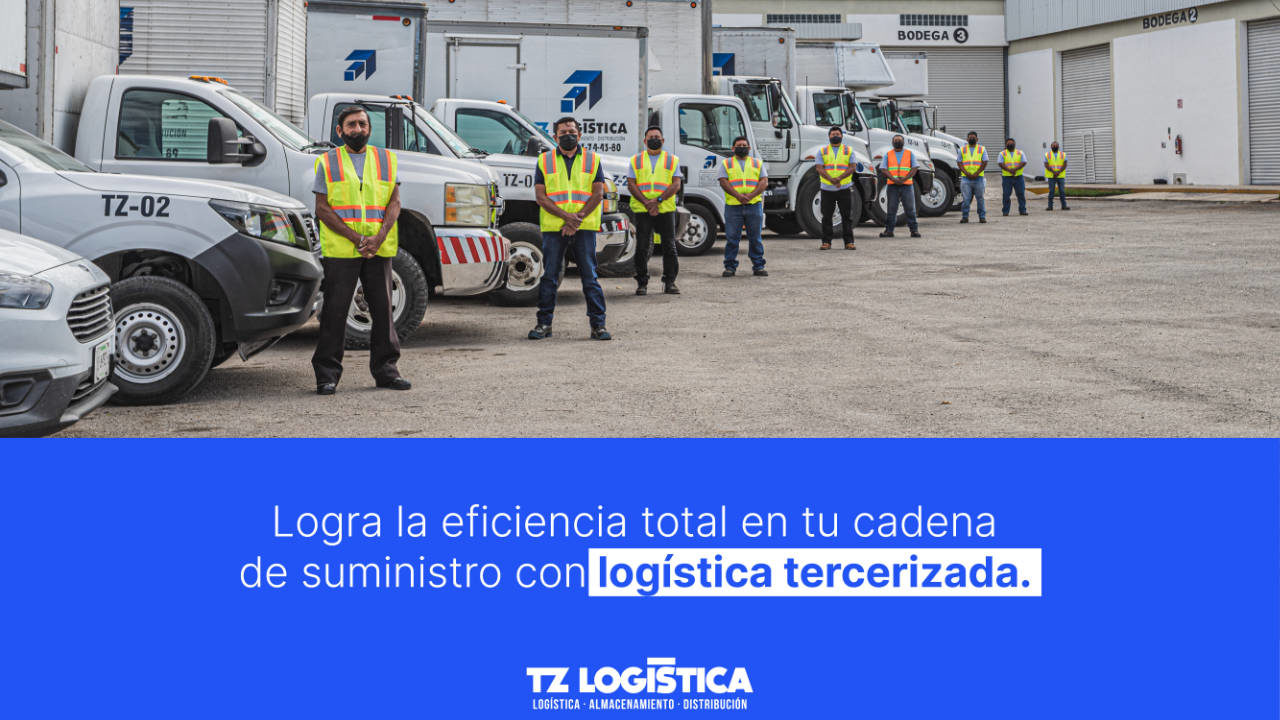
With over 50 years of experience operating in the peninsula, we help companies strengthen their supply chain with logistics solutions designed to adapt, optimize and maintain operational continuity even in highly demanding scenarios.
Because in times of crisis, improvisation is not a strategy.



Leave a Reply